Conversations about AI today revolve around LLMs, predictive neural networks, and autonomous agents, and it’s easy to feel like data-driven decision-making is a new phenomenon. But is it really? We have put astronauts on the moon, cloned a sheep, and mapped the human genome.
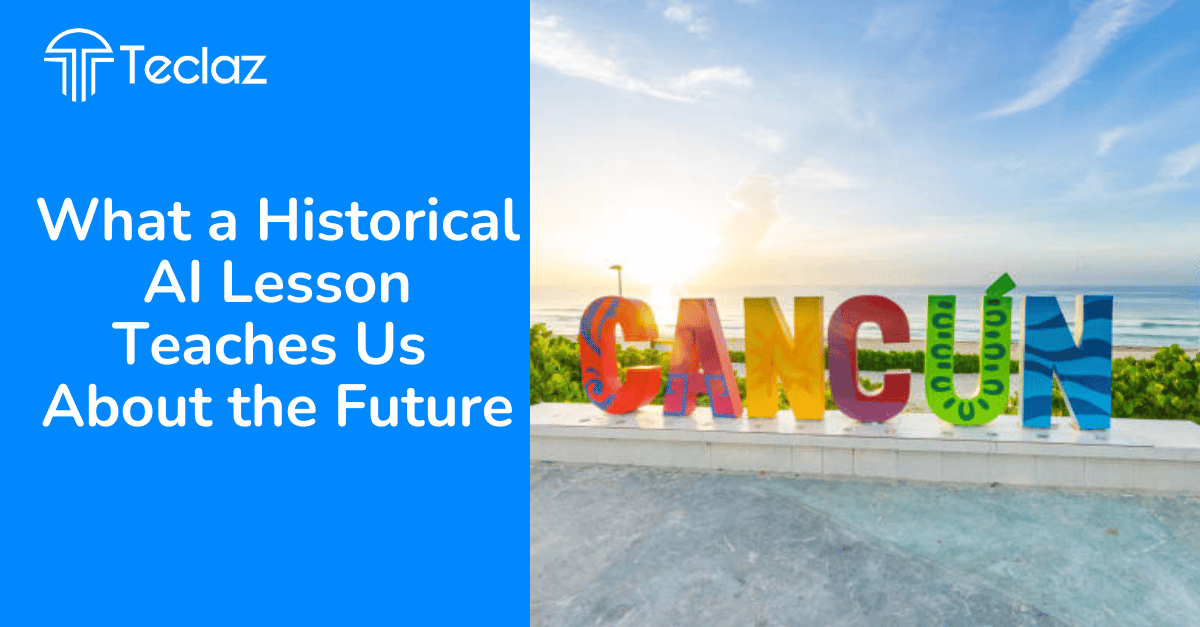
A 1972 New York Times article titled "Why the Computer Chose Cancun" serves as a powerful reminder that using algorithms to solve complex, real-world problems has been used for over half a century. Before Cancun became a global mega-resort with 10+ million annual visitors in 2026, it was a nine-mile strip of jungle and sand dunes in Quintana Roo, home to just a handful of people. How did Cancun transform from an unknown, snake-infested coast into one of the most successful tourist destinations in modern history?
It started with an IBM mainframe, and might be the first AI-designed city, before AI was even a word or concept. In the late 1960s, Mexico’s central bank, via its tourism agency, Infratur, set out to build a brand-new resort town to boost the nation’s economy. The team gathered mountains of data, rather than relying on guesswork. They built a comprehensive profile of Caribbean tourists by mapping migratory habits, spending power, and travel durations. Then, they ingested environmental and geographical variables across Mexico’s 6,000 miles of coastline: average temperatures, rainfall, hurricane risk, water availability, shark presence, local economic depression, and proximity to cultural landmarks. They fed this multi-dimensional dataset into a computer program. The algorithm crunched the numbers and delivered its top candidates, and Cancun was at the top of the list.
This article triggered a sense of nostalgia for me. I took my first flight on Aeromexico to Cancun my senior year of high school. I fundraised all year with my Spanish Club to earn the money for the trip to visit Chichen Itza and the Yucatan Peninsula. I never knew how Cancun came to be the tourist destination that I experienced until I read this article. I also realized that professionally there are some takeaways that are highly relevant for founders and executive teams.
- Data Extends Vision, But Humans Provide Context. The computer generated the candidates, but human experts didn't blindly hit deploy. Infratur planners personally visited the short-listed locations, stepping into the surf, inspecting living conditions, and validating the algorithm's predictions on the ground. AI is a force multiplier for human decision-making, not a substitute for ground truth. The best intelligence systems act as co-pilots that synthesize inputs so humans can make high-stakes calls with clarity.
- The Power of "Upstream" Optimization. Infratur didn't use technology just to market a resort; they used it to decide where to build the infrastructure in the first place. Today, many enterprises relegate AI to downstream tasks—optimizing ad copy, customer support scripts, or social media scheduling. The highest ROI comes when algorithms are leveraged upstream: optimizing online storefronts, buyer journeys, and understanding campaign performance.
- Framing the Right Objectives. The algorithm succeeded because the parameters were defined with extreme rigor. Infratur didn't ask "Where is a pretty beach?" They asked "Where can we align tourist demand, environmental resilience, low hurricane risk, and regional poverty alleviation to create economic mobility?"
Over 50 years later, Cancun’s existence is proof of what happens when data-driven models meet bold real-world execution.
At Teclaz, we often talk about the gap between data and actionable insights. Whether it’s an IBM mainframe crunching weather reports or an advanced LLM analyzing millions of parameters in milliseconds, the goal is similar: to turn overwhelming complexity into decisive, transformative action. The tools have gotten faster, but having a clear strategy, rigorous data hygiene, and human context remains as relevant today as it was in 1972.